
← All FAQs
Frequently asked question
What is Ayurveda tourism in Kerala?
Kerala is strongly associated with traditional Ayurveda practices.
Visitors can find Ayurveda resorts, wellness retreats and treatment centres offering various therapies and wellness programmes.
Travellers seeking treatment rather than a general spa experience should research the facility carefully and check the qualifications of practitioners.

Itinerary
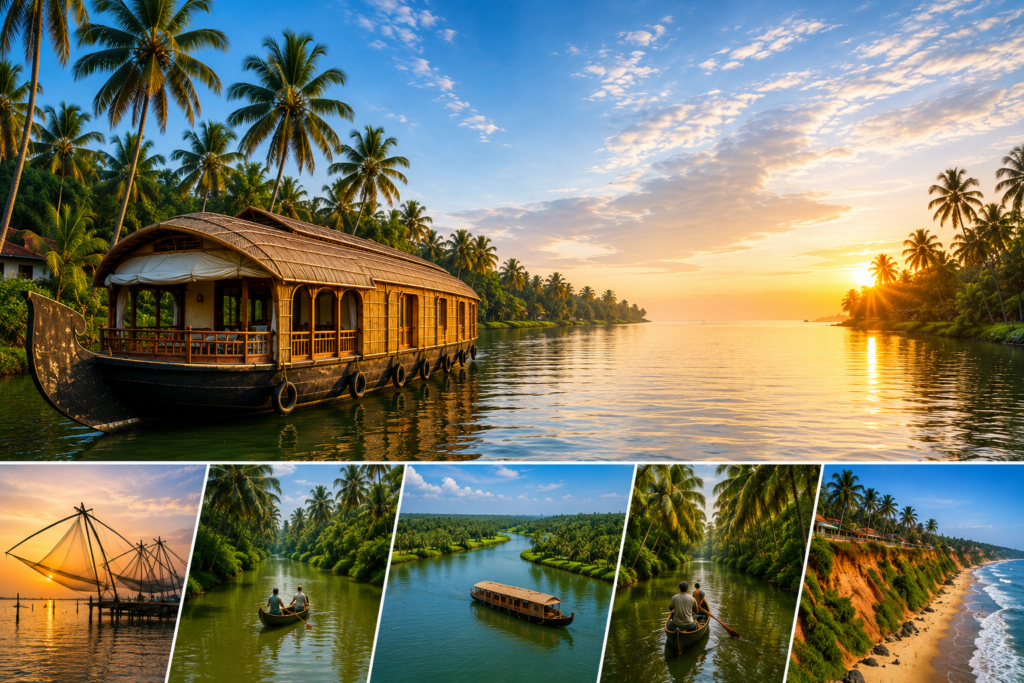
7 Days / 6 Nights Itinerary – Kerala Backwaters Tour Guide
Kochi → Kumarakom → Alappuzha/Kuttanad → Kollam → Munroe Island → Varkala → Thiruvananthapuram
Explore →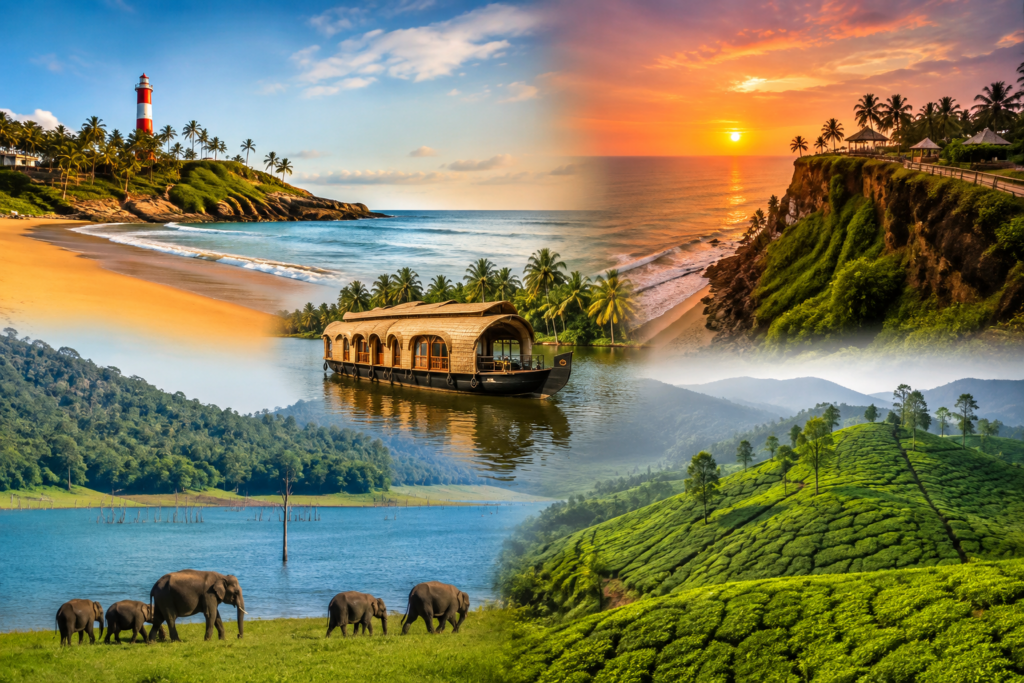
Itinerary
7 Days Kerala Itinerary – Beaches, Backwaters, Wildlife & Munnar
Thiruvananthapuram → Kovalam → Varkala → Alappuzha → Thekkady → Munnar → Kochi
Explore →Is Kerala suitable for senior citizens?
Yes, provided the itinerary is planned appropriately.
Backwater resorts, comfortable hotels, scenic drives and relaxed beach destinations can work particularly well for older travellers.
Check accessibility carefully before booking houseboats, treehouses, hill properties or attractions involving extensive walking or stairs.
What makes Kerala different from other Indian destinations?
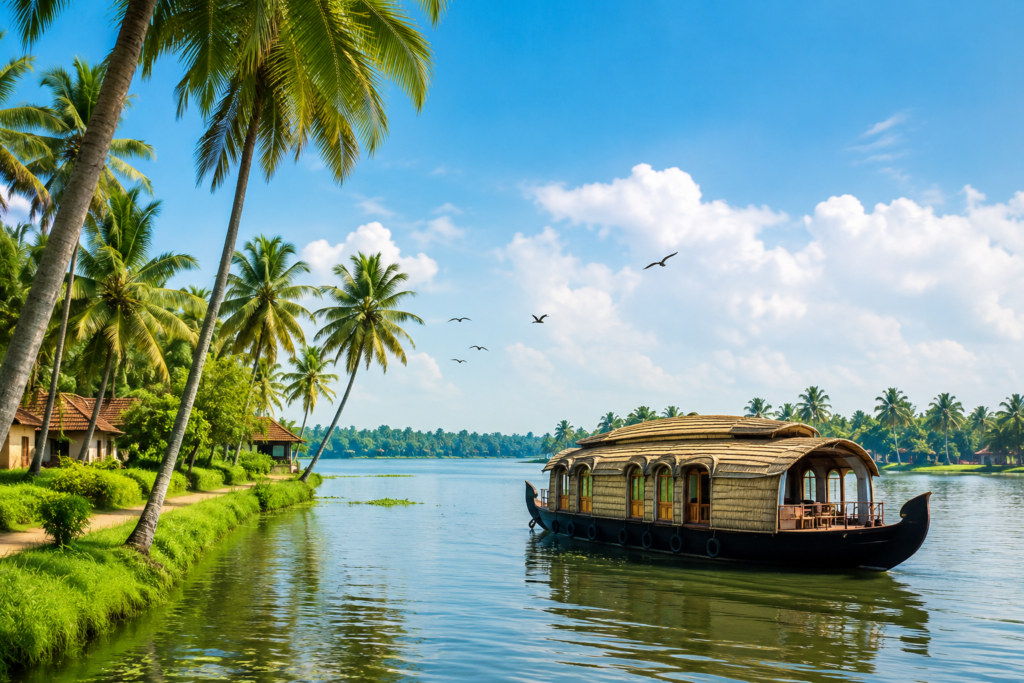
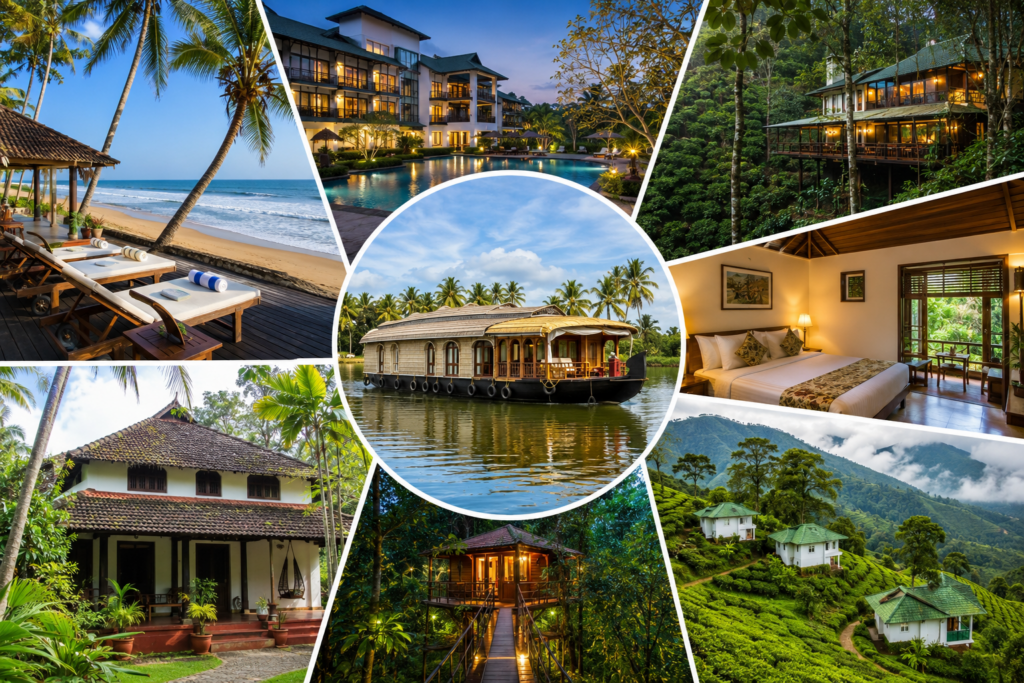
Kerala combines an unusual variety of experiences within one state: Arabian Sea beaches, extensive backwaters, Western Ghats, tea and spice plantations, tropical forests, wildlife, Ayurveda traditions, distinctive cuisine and a rich cultural heritage.
You can wake up beside the sea, spend another night on a houseboat and then travel into mist-covered mountains.
That diversity is one of the main reasons Kerala continues to attract travellers from India and around the world.
What should I pack for a Kerala holiday?
Useful items include lightweight clothing, comfortable walking shoes, sunscreen, sunglasses, a hat, mosquito repellent, reusable water bottle and personal medicines.
During the monsoon, add an umbrella or lightweight rain jacket. For hill stations, pack a light jacket or warmer layer.
What souvenirs can I buy from Kerala?
Popular purchases include spices, tea, coffee, handicrafts, traditional textiles, coconut-based products and locally produced foods.
Tea and spices can be particularly interesting purchases when visiting plantation regions.